Thursday, 23 September 2021

Signs of life


As I start this post, Mary is practising the cello downstairs.  This has been one of the most constant musical sounds of the past 18 months here, and it is particularly noteworthy (no pun intended) since she has little to sustain her efforts beyond her own interest and commitment.  Lessons and chamber music are about to start again in Vauvert.  Meanwhile, the Bach choir I belong to is also struggling to emerge from the difficulties of Covid, which has created difficulties in rehearsals as well as leading to the postponement or cancellation of many concerts (as of course it has for almost every musician from amateurs like us to the top professionals.  The choir will need a lot of luck and effort if we are to continue.

But last weekend we went to an excellent concert, our first live for many months.  Our friends Karen and François-Xavier are baroque specialists but with a very broad spectrum of interests and repertoire, and their programme with the Sétois singer Max was of the chansons of Georges Brassens.  His music needs little introduction for French people, especially those from this part of the south of France where his name is familiar from many local concert buildings including the Salle Georges Brassens in Lunel.  In short, his words and music are part of the everyday ability to sing along for locals, but we know it far less well.  However, he combines attractive memorable tunes with a rich popular poetry, and combination of well-turned phrases and an earthy side.

Our friends, and their excellent singer, added a very individual touch to the already appealing music  by their choice of baroque instrumentation and by the combination of instrumental interludes from the baroque repertoire which blended seamlessly with the songs.  On a beautiful September evening in a recital room in the impressive château in Lavérune the effect as the sun went down was really impressive and enjoyable.  But despite our improving grasp of the French language we found it hard to catch the often allusive language of the songs, and I'm looking forward to searching out the words and re-listening to songs which some of our neighbours were humming under their breath as they listened, so familiar are they!

Music continues to provide a daily backdrop to our lives through the medium of recordings, whether broadcast of on other media.  Not the kind of music usually referred to in quizzes like Pointless which we watch regularly on BBC tv (competitors regularly score well in music round which leave us clueless), but the wide world of  'classical' music, particularly baroque and early 19th century music which has been the ostinato of our musical lives for 50 years.  We look forward to more opportunities to play chamber music with friends as we often used to do, and meanwhile Mary's cello takes her into a rather wider repertoire of romantic music and opera as part of the groups she plays in.  We are very lucky, even now, to have access to good music to listen to - we hope the opportunities to play and sing will gradually re-emerge.  The dogs sit patiently through it all in the sunshine!


Sunday, 9 May 2021

Spring harmonies


Mary is practising the cello often as I start this post.  As I said last time, she has been pleased to be involved as a stand-in teacher for some of the younger pupils of her cello teacher (who had time off for an operation) at the Vauvert music school, with the added bonus of being paid for the few sessions that have been possible during these locked down times – that school is among many in the arts who are frustrated that they are still going to be restricted even when ordinary lycées and collèges are reopening.  But Mary has really enjoyed the encounters with young people.  The pictures below are from  a little concert we did in the garden of our friends Pierre & Charles over 10 years, one of many recitals we enjoyed with them in the early part of our time in France.  We have not seen them for a while, but I listen daily to the recordings of Corelli trio sonatas that we play in the car.

We have as usual been listening to a lot of recordings and broadcasts on BBC Radio 3 and elsewhere.  Thanks to weird goings on R 3 early on Saturday mornings (experimental apparently, not to my taste anyway)  I’ve taken to recording the night time broadcasts which frequently have interesting concerts and whole work played through.  One such last weekend was a Scandinavian concert with with Marianne Beate Kielland singing Schubert Songs with orchestral accompaniments (these are after the Sibelius, about 11 minutes in near the beginning of this concert).  This was a great pleasure: songs I knew well but with a singer but in arrangements I’d not have stumbled across but for the accident of avoiding other things.

A few years ago, at the beautiful countryside setting Val du Séran, home of Stéphane and Chantal Fauth I sang the Vaughan Williams cycle On Wenlock Edge, settings of 6 poems from A A Housman's collection A Shropshire lad.  Last week we heard arrangements of some of these poems by another English composer and poet  Ivor Gurney.  The full setting (like the Vaughan Williams) is for tenor voice, piano and string quartet but there is a version just for voice and piano.  Gurney's is a troubled story, plagued by mental ill-health, confined in an asylum and rejected by many because of his illness, but Vaughan Williams apparently valued his work and visited him a number of times.  I was taken with these settings and, perhaps optimistically, hope I might one day sing them.

The percussionist Fang Zhang has won the delayed BBC Young Musician 2020, playing incredibly movingly and sensitively on the marimba.  We have long been fans of the competition and followed several of the biennial contests, watching and listening to so many wonderful young performers who have now become well-known, established musicians.  It has been derided by some, but we realise now that our view of 'music' is simply different from that of many people - we are clueless about most of the popular names that regularly crop up in the music rounds of quiz shows like Pointless as many of those competitors, and some of our friends, are about our taste in 'classical' music.  We always at least try to keep an open mind!  Anyway, this year's Young Musician final also included a french horn player and an  oboist, both very fine performances but simply overwhelmed by the brilliance of the marimba.  We were delighted to find that all three of the modern pieces played in the Final were interesting and approachable.

As I write I am about to go to the first choir rehearsal for some time.  In normal times we have performed 2 or 3 Bach concerts each year, with small instrumental ensembles.  Happily there are good musicians and vocal soloists specialising in the baroque, and I've just come across this group, Ensemble Arianna in Montpellier - the bass player and others in the video has often played with our choir.

A photo of a choir performance two or three years ago

I'm reminded often of great musicians and groups which were part of my musical upbringing, one of them the 
Amadeus string quartet.  Amadeus, one of Mozart's names,  is derived from the Latin words ama – the imperative of the word amare (to love) – and deus (god), so it means literally "love god".  I realised recently that the German equivalent is Gottlieb, and Habibullah (Arabic) and Theophilus (Greek) have similar roots.

As my broken arm has healed I've been able to get back to a little recorder playing, although numb fingers still make playing slightly hit and miss.  But since Mary is practising a 2-cello arrangement of one of Bach's 2-part Inventions to work on with her teacher, I've arranged two of them to play with recorder and cello.  The originals were for keyboard.  I'm frustrated that the sheet music editor called Music Publisher produced by a nice man in Scotland for many years is now obsolete, and I have not found a good replacement.  I shall keep looking!

over 10 years ago now, when we gave a recital of songs to accompany a lecture on Darwin in the Cevennes

And finally, in these times when live audiences at concerts are rare, a little story from a book I read with great enjoyment "In October 1940 Marjorie Redman was enjoying a lunchtime concert given by the Stratton Quartet at the National Gallery. In the middle came an unexpected crescendo: a bomb on a delay fuse exploded. Some of the audience leapt up in alarm – but the quartet played on as though nothing had happened. ‘People not only subside,’ writes Redman in her diary, ‘but several by the door say “Sssshhh!” as if someone had talked in the slow movement of Eroica.’ There is something absurd and wonderful about a music-lover warning a high-explosive bomb to shut up. Even Canute only attempted to lecture the sea." (from The Secret History of the Blitz,  by Joshua Levine)


Monday, 5 April 2021

Listening in lockdown

some Easter flowers

We’re amateur musicians.  We enjoy playing and (in my case) singing, but giving concerts, performing in public, is not a high priority for us.  But this period of uncertainty has left us frequent disappointments, when the rare chances we might have to play music with friends (we have a group of 4, 2 couples, which used to get together playing baroque trio sonatas) are cancelled again and again because of Covid.  Sadly I think our next date later in April will be added to the cancellation list.

All the same, Mary has been pleased and touched to be asked to help out at the Vauvert music school where she has her cello lessons.  Her teacher is unwell, and M has been asked to stand in for her working with individual young pupils.  Even without Covid it would only have been for a short time, and the latest lockdown measures curtail it even more, but it is both an unexpected extra thing to do, more variety, but at the same time a bit daunting.  Tomorrow’s will be the last session for now, but she’ll be back later in April to complete the lessons, around 20 young people of varying abilities over two days a week normally.  Of course, whatever her qualities as a cellist her experience as a teacher and musician means that she has things to offer and she has enjoyed meeting the pupils so far.  Meanwhile my choir in Montpellier is postpones again and again, and the various schemes that have been suggested for sectional rehearsals don’t seem to me to be very useful even when they were allowed.

soprano and flute, following Jesus to the cross
All of which leaves us with the alternatives of listening to radio and recordings.  To be honest, these days that attracts me more than performing, and there are plenty of inspirational things to listen to.  At Easter there are of course Bach Passions on offer, and while Mary was out meeting her pupils on Wednesday I listened to a broadcast of the St Matthew Passion which I don’t know very well, a Dutch performance with beautiful singing and playing, particularly a lovely tenor evangelist.  The 3 hours’ music took me through mundane morning chores and past lunch too!  Listening is more practical in combination with other simple tasks – you aren’t glued to a screen, and so can listen as you potter about.  I’ve enjoyed the more flexible opportunities available through podcasts and ‘catch-up’ radio, especially since we’ve acquired high-quality wireless (Bluetooth) speakers.

 This Easter Sunday, we played a lovely tv programme of excepts from the Messiah from English National Opera at the Coliseum.  Marvellous soloists, including Iestyn Davies whom we heard live in Handel, Saul, at Glyndebourne.  The chorus and orchestra of the English National Opera, including wonderful valveless trumpets, were spread right across the auditorium, which turns out to have a very good acoustic when empty - never of course heard like that except in these odd times.  But singing and playing widely spaced like that must have been a great challenge, successfully surmounted.  And we also played the Easter service from King's College Cambridge - as at Christmas the tenors and basses of the choir were replaced by the Kings Singers, who blended well with the boys' voices.


Tuesday, 27 October 2020

Inspirations - part 1


Illustrating a talk about Charles Darwin

As I began to write this, Mary was practising the cello downstairs.  She used to accompany me often on the piano, but these days most of her energies are directed towards the cello.  Practising is vital for musicians.  It it's not always easy to listen to, but I can honestly say it is a pleasure to hear her, not only because there are a lot of really nice sounds coming from her bow but because I can hear the improvement over weeks and months and indeed years.  I cannot even imagine being able to play a stringed instrument in tune (it is 60 years since I put aside the short-lived attempts I made to learn the viola) let alone musically as Mary does.  I am a lazy musician so rely on whatever passes for talent in my singing and recorder playing - not nearly enough practice, so I stand no chance at getting anywhere near perfection.

But although she has a few opportunities to play with other musicians just now, Mary shows a determination which is shared by amateurs like us all the way up to the best professionals.  In our heart of hearts we know that only a lot of practice leads to the wonderful music we so much like to listen to. Listening as we do every day to music on radio and on recordings, I have been marking out the musical influences which keep us going.  In another post I'll list some of the musicians and performances that inspire us, but first a few of the people who have contributed to my love of music at closer quarters.

Richard Sturge at his
wedding, long before we met

 Richard Sturge, music teacher at my secondary school and conductor of its   choirs, tried in vain to make a reasonable pianist of me, and I think gave me   every opportunity before admitting defeat (he did not often give up on pupils).    But he was an inspirational choral conductor, encouraged my singing (from a   joint solo moment in Rubbra as a 12-year old soprano onwards)  He has left me with memorable and indelible experiences, from the Verdi Requiem which was my first experience of a major choral work with soloists including Cynthia Glover and Winfred Brown, to the carol concerts our small choir did every December around Essex and in London, a repertoire which remains my favourite these many years later.  The boarding school I attended was not always happy for me, but its musical life (a touch unlikely in a Quaker school) was wonderful thanks largely to him.                                                                                                                                

At university I was supposed to be a chemistry student but took every opportunity to listen to music and
to sing, and again recall whole chunks of the major works we performed there, including Dido & Aeneas, a staged version of Handel's Saul, and Bach's St John Passion  All three have continued to play important parts in my musical life over the intervening 55 years.  Much of the credit for this part of my musical inspiration must go to Philip Ledger, taking the helm of the embryo music department at UEA and already a key part of the English Opera Group but still on the way to the the height of his distinguished career.  I feel proud to have known him and worked with him as a chorus member, and to have had the privilege of signing Bach in one performance with Peter Pears as Evangelist.

Much later in my life in my 40s, I encountered Joan Robinson.  I had been attracted to a group called the London Lieder Group which met in NW London, under the inspiration of a slightly eccentric man called Leslie Minchin, an enthusiast for translating lieder into English (I always sing the texts in German except the few Shakespeare and Walter Scott ones which fit well in English) - copies of his books on Schubert and Schumann are still on sale.  There I met a Joan, who spent her life (when not teaching piano to earn a crust) playing Schubert accompaniments (and, I later discovered, music hall songs!).  She was an exceptional accompanist and we worked together for nearly a decade.  We did numerous recital weekends, concerts and two Edinburgh Fringe weeks (in the days when you could do those as good amateurs).  I learnt an immeasurable amount from her about Schubert song, and sang with her  nearly 150 of the 600+ he wrote.  She died too young, and I belatedly realised that she like me had suffered from depression over many years - a wonderful Schubertian role model.

Tony Milledge (like most here now sadly deceased) became a friend in the 1980s, and I joined his
Canonbury Chamber Choir for several years until I moved to Derbyshire.  Nearly everyone in the choir was expected to contribute as a soloist, and my memorable moment was singing the soprano/tenor duet from the B minor mass with Alison Liney, as well as singing alongside Mike Hutchinson whose splendid tenor solo career continued for many years after I left.  Their St John Passion with Mike as Evengelist still remains in my memory, alongside the performance I was involved in here in France in the chorale BaBach with Fraech Haicied as Evangelist.

I go further back in mu musical memory to recall Ruth Liebrecht, whose weekly Tuesday evening recorder groups were so important in my musical education.  It was there that I learnt much I still carry with me of the renaissance consort repertoire, and there also that I stumbled across the world of early music and Musica Reservata, Michael Morrow's pioneering group which rehearsed in Ruth and Heinz's house.  I still think of Ruth as, in a sense, my 'second mother', thankful to have been given a lodging there over many years and proud still to be in touch with their son Uri whose translations of German lieder texts are widely valued.  The recorder playing I began there in my early 20s were the foundation for me of 50 years playing renaissance consort music.

Which brings me finally to Walter Bergmann.  We still have the descant recorder on which our son already too briefly tried to master the instrument with Walter's help at his Belsize Square home, but his inspiration on SRP summer schools was manifold, among other things in the moments when Mary and I meet and got together.  Walter lived round the corner from my temporary lodging in Belsize Square, and he as a pioneer in editing, publishing and playing early music.  I will never forget the way he seized and tore up photocopies students had brought to his classes - apart from his inspiration as a musician, he was a lawyer by origin and so knew the importance of copyright for people like him who earned their living by editing and publishing early music.

Playing recorders in Anduze - Association des musiciens amateurs


Thursday, 24 September 2020

Glorious things


The arrival of a pandemic-hit Proms season took me back to my frequent visits to the Albert Hall, queuing on the steps for standing places (not much promenading took place when we were all crammed in, and I have wonderful memories of Malcolm Sargent, Adrian Boult, Colin Davis and many other BBC stalwarts seen from below the podium.  Much of the large-scale orchestral music in those programmes did not and still doesn't appeal to me, But I have indelible memories of Berlioz' Harold in Italy for example among many other pieces.

 Now the music has been caught up in the prevailing wish to purge imperial symbolism and oppressive icons from everything, a task that seems likely to be beyond anyone.  I'm not sure why the comparatively innocuous words of Land of Hope and Glory and Rule Britannia should have caused such a furore (Boris Johnson said he can't believe the decision to play instrumental versions of the music of Arne and Elgar, both good tunes in any case, and in the end the words were included) but the last night was said to be moving in an almost empty Albert Hall - Golda Schultz laid the ghost of Constance Shacklock with a version of Jerusalem I see was not to everyone's taste!  But the ire directed at Dalia Stasevska who conducted was quite unjustified, and in any case she did not make the decision!  Social media have a lot to answer for, but prejudice has long co-opted good music in its cause, sometimes in two directions at once!

My favourite hymn at school was no.500 in Songs of Praise, Glorious things of thee are spoken to music by Haydn, a hymn tune originally written by Haydn, which continued as a well-known hymn tune but was also, from 1922, the German national anthem.  Obviously its association with the Nazis over the war period gave rise to polarised views among its listeners.  Over time my own appreciation of the music has been linked mainly to the Haydn C major string quartet op 76 no 3 (nicknamed 'the Emperor') whose slow movement is a set of variations on "Gott erhalte Franz den Kaiser" ("God Save Emperor Francis"), an anthem - that hymn - he wrote for Emperor Francis II.  A beautiful movement.

It may be a bit glib to say that most of our (British, French and much other) history is entangled with the prevailing themes of the times - imperialism, slavery and general inhumane nastiness we find it less easy to stomach today.  Composers like Elgar, Beethoven and others were of their time, and wrote for predominantly rich and autocratic paymasters.  There are other role models - Britten for example - who can stand as examples of humanity and enlightenment, but most people don't stop to weigh the background of the things they listen to.  If they do, they may not know the whole story, or they may be swayed by the associations of things like the German national anthem, or the Ode to Joy from Beethoven's 9th symphony which itself passionately divides pro- and anti-European sentiments.  Wagner was also co-opted by the Nazis, but equally championed in the mdern era by Daniel Barenboim.  It's a hopeless case.  

I have written elsewhere about my enjoyment of Monteverdi's Incoronazione di Poppea, about the passionate affair between two of the least pleasant people you can imagine, Nero and Poppea, and my favourite opera the Marriage of Figaro is riddled with classist and sexist imagery.   Most Old Testament stories are equally built on violent themes, like the battle-ridden oratorio Saul by Handel whose music we have so much enjoyed in the past months - after attending a wonderful performance at Glyndebourne last year we have enjoyed that same production on DVD with Iestyn Davies and the wonderful Lucy Crowe among others.  I read that the original audiences hearing this music and the story it tells would probably have interpreted it as about the fall of the house of Stuart - all music can be reinterpreted, perhaps was composed, in the political and social climate of the times.


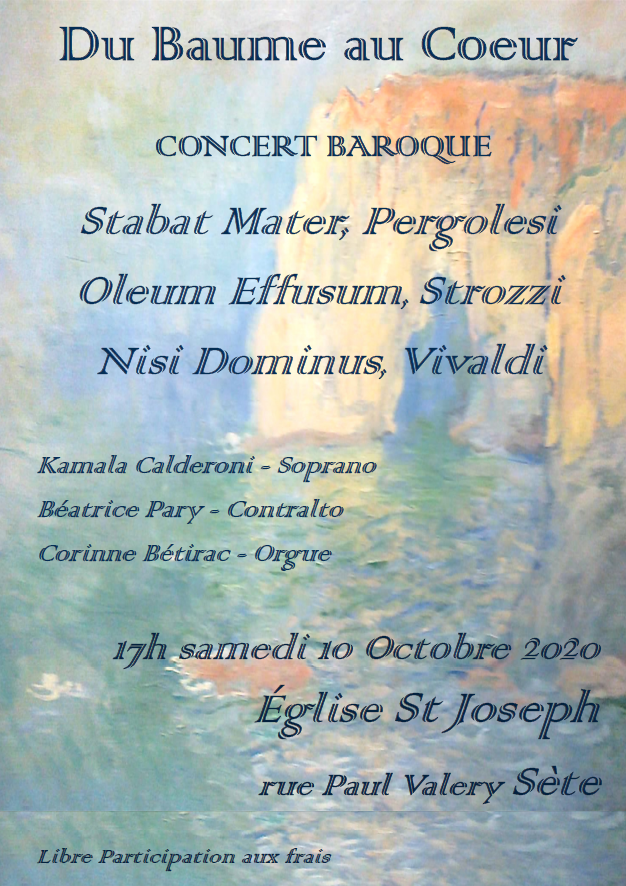
So I have no brief for tub-thumping renditions of Land of Hope & Glory, nor am I sure we'll ever get back to feeling safe about lusty mass singing in concert halls if it risks spreading infections, but I guess we need to keep things in perspective.  Mary and I are hesitating to get back into group music when choirs and orchestras are almost bound to be in rooms with too little distance and too much moving air.  And audiences can be stupid en masse, abandoning masks (which don't stop you listening however uncomfortable) and allowing enthusiasm to overcome the right amount of separation from neighbours in the audience.  At the same time I am glad there are small-scale events - my friend and singing teacher Kamala is putting on a recital in Sète soon, and there will be a nice string quartet concert at a vigneron's the other side fo Montpellier, so we can combine two pleasures on one evening!    


Wednesday, 29 July 2020

Figarissimo

We have always loved the Mozart opera The marriage of Figaro, have been to many live performances and collected recordings for years.  My musical life as a student was conditioned by friends singing duets in which the soprano was Susanna, the baritone sometimes the Count Almaviva, sometimes Figaro.  It was only later in my twenties that I began to disentangle the characters, and realise that the while the character of Figaro is often rash and not as clever as he thinks he is, but the Count (as Mary insists in selection of her favourite performances) is sinister or just plain unpleasant, as he attempts to get his evil way with servant girls and applies double standards in his jealous treatment of the Countess.


Mozart was 30 when he wrote Le nozze di Figaro - a mature work from a still young man then, whose composer died only a few years later.  But he had shown a precocious grasp of life and love for many years before - Jane Glover writes of his opera Mitridate, re di Ponto (one of 3 he wrote in Italy in his teens) “For a fourteen-year-old boy to have grasped the concepts of love and duty with such success was already remarkable. For him to have begun to understand the unthinkable turmoil of a suicidal moment is almost frightening; and his interpreter, the creator of Gluck’s Alceste, with performing attributes much greater than mere technical proficiency, had played her part in inspiring this step towards maturity. Mitridate, re di Ponto was an enormous success for Mozart and a personal triumph too for Antonia Bernasconi: at the first performance her arias were all encored, and the running time of the opera was stretched to more than six hours.”  Glover, Jane. Mozart's Women: His Family, His Friends, His Music . Pan Macmillan. Kindle Edition.

After student encounters, my next clearest memories are of attending performances with Mary.  The one she remembers best is a 'pocket' performance with a cut-down orchestra  at the Palace Theatre in Newark; more recently we went with friends to a performance at a theatre in Carcassonne - over the years many live performances, many sound and video recordings collected.  I think my favourite Susanna, the most important role in the opera, is a sound recording with Barbara Bonney, whose opening request to Figaro to admire her hat has reduced me to tears at traffic lights on the Nottingham ring road!!  She sang with the Stockholm Drottingholm ensemble of Arnold Östman and I'm just sorry there is no video I can find of this.

Although we were conscious that the Librettist Lorenzo da Ponte wrote the words, it takes closer reading of the circumstances to realise quite how closely this opera (and the other two da Ponte collaborations) were joint enterprises.  Mozart simply fed from and enhanced the brilliant text provided by da Ponte, but for us the music is more accessible because we have to keep reminding ourselves via subtitles of the meaning of the Italian text.  In composition, however, it seems to have been a question of daily give and take as  the creation developed.  

Other operas were slotted onto ready-made libretti - this was constructed around an interplay of words and music.  And as a result we have moments of magic, the letter duet in which the Countess dictates and Susanna writes, then reads back the letter; the flurried whirl in which Cherubino jumps from the window to Susanna's alarm; Susanna and the Countess's sensuous interplay with Cherubino as they play at dressing him as a girl; Figaro's discovery of his parents and Susanna's bewildered reaction, the final dénouement in which Susanna and Figaro finally expose the Count's infidelity.   


How many Marriages of Figaro is or are too many?  This may not be a question it's possible to answer.  At any rate we possess at least around a dozen video and sound recordings, and of course you can find many more online - in these days of closed theatres, we have just taken advantage of the 2012 Glyndebourne streaming on YouTube, with fine singing and a very well-managed staging with a period setting in 1960s Britain.  My own favourite perhaps is another Gylndebourne production in 1986, in which Joan Rodgers plays Susanna.  

This opera, together with an earlier episode in the life Figaro expounded in various musical versions as The barber of Seville (another by Paisiello who as a popular opera composer influenced both Mozart and Rossini) , is based on 2 Beaumarchais plays with the same titles said to have helped cause the French revolution so it's obviously relevant to us living where we now do.  Gary Younge has described the French Revolution as 'a riot blessed by history' - probably better put as a series of contradictory riots over several years.  But the themes of the opera are only a corner of this, the parallel stories of class privilege and the difficulties of women in a man's world.  In the Mozart, a day's action is crammed with beautiful music and complicated sub-plots.  The recordings we have span 50 years of changing fashion and advancing technology in production and musical direction.


As I write we are listening to the broadcast by France Musique of the 2007 concert performance in Beaune.  You can hear it here  NB the link is a bit wayward - I even managed to get two versions playing a second apart which was weird!  Keep trying, you'll get there in the end!  A very good period instrument ensemble, excellent singers (though Figaro is a bit boisterous - his bed measuring utterances at the beginning sound as if they are being yelled down from a scaffold to his not-taking made on the ground!), and the only real problem is that the hall in which it was performed is resonant so that some fast tempi blur, particularly woodwind obbligato parts which are fairly essential in Mozart.

Paul Thomason says "Some critics have called Le Nozze di Figaro the most perfect opera ever written. In Mozart’s Women, Jane Glover sums it up  'For all the stirring portrayals of character in the works of Mozart’s predecessors and contemporaries, even indeed in his own operas, nothing before had ever discovered such astonishing depth of veracity. Between them, Mozart and Da Ponte had finally held the mirror up to the audience: ‘This,’ they were saying, ‘is all about you.’”


Sunday, 28 June 2020

Music in lockdown


The arts world is of course at sixes and sevens because without audiences most performers and venues are losing poney hand over fist.  All our adult lives we have played, sung, listened to music and gone to theatres for opera and drama of all kinds.  in our family are people who depend on live performance in different ways for their livelihood, so we hold our breath and cross our fingers for the future - and there are gloomy articles about the difficulties.

But in the middle of it all there are wonderful moments of hope and inspiration.  I have just starts listening to BBC Radio Lockdown theatre, productions recreated at home by artists who would have been performing them in theatres.  For us, the most marvellous moments have come from the live lunchtime concerts broadcast by the BBC from an almost empty Wigmore Hall in London.  The whole catalogue of currently available ones is here.  Among many marvels the Bach recital by Angela Hewitt this week was special

Some performers have said it isn't the same, or as good, without a live audience - that must be true I guess - audiences pay artists fees, artists thrive on applause and appreciation, and acoustics are different in empty halls.  But the sense of rapt attention, focus and concentration in  many of the performances we have heard is wonderful, even over the radio waves, and several artists have spoken of the privilege they feel to have been invited in this month's series.  The BBC has considerable clout and influence in this sphere, and audiences for music have increased many-fold - we can only hope that the constant noise of wrecking moves from part of the British govt are quelled by the obvious value of such cultural activity in times of national crisis.

Saturday mornings are usually a special treat on Radio 3, with Record Review throwing up goodies known and unknown, and then Jess Gillam.  We admired her in her runner-up role when Sheku Kanneh-Mason won BBC Young Musician, but the BBC obviously recognised multi-talent when they found it, and she has become a radio presenter as to the manner born.  One of our friends is pleased to have known her growing up in Cumbria.


Meanwhile Mary and I have our own musical pastimes - Mary works very hard on the cello as is obvious from my reports of her success in the little concert she took part in at the Val du Séran, and she enjoys the work - she was delighted to hear last week that her teacher at the Vauvert music school is likely to give her a longer lesson each week.  We actually have and she uses 2 cellos, one tuned to modern pitch (which can be anything from A=440 upwards) and the other at 'baroque' pitch, A=415 - the latter belongs to a friend who no longer plays, and we are always grateful to him for lending Mary the instrument, especially as shortly we'll have the chance to play chamber music with our musician friends who live in the Cevennes.  Meanwhile we have been trying recorder sonatas without the keyboard, by Benedetto Marcello, Daniel Purcell and Croft.